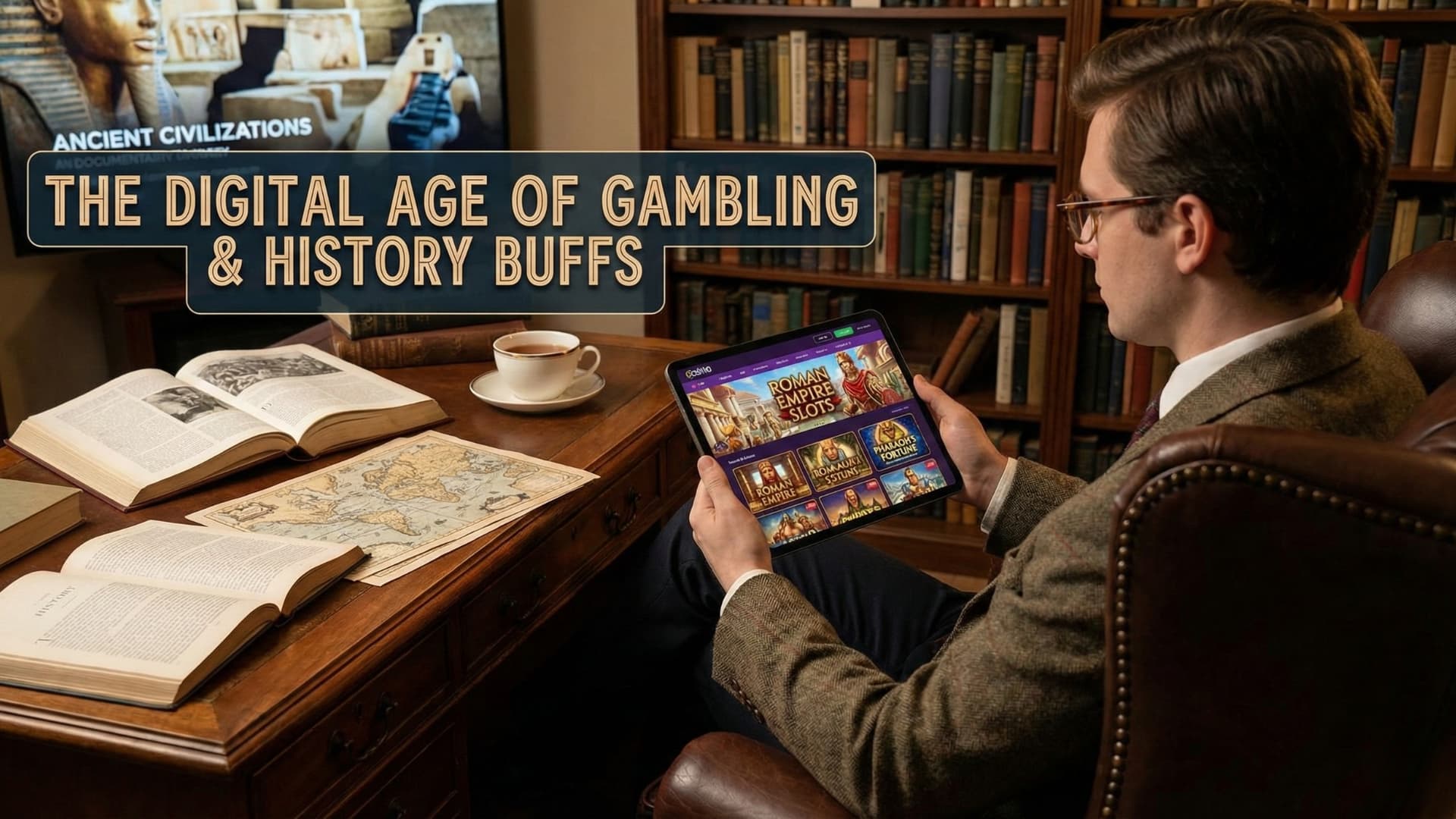
A retired archaeology professor sits down for the evening and has a choice his colleagues from twenty years ago never faced. He could read about ancient Roman gambling practices like he used to. Or he could pull out his phone and actually play a game designed around those same practices. Both options are right there. The line between studying history and experiencing a digital version of it has gotten blurry.
Online gambling isn’t just slot machines and poker anymore. A lot of platforms now build games around historical themes with real attention to period details and educational stuff. This creates something weird: history enthusiasts realizing their free time overlaps more and more with gaming spaces they used to think of as pure entertainment.
This raises interesting questions about how people engage with history now. Museum curators watch their audiences split their time across a dozen different digital platforms. If you care about how historical knowledge gets shared and experienced today, these patterns matter.
Historical Themes Meet Modern Gaming Technology
Gambling platforms figured out that history sells. Ancient Egypt, Roman Empire, Viking Age, Medieval Europe, Wild West. These themes dominate game libraries. And they’re not just slapping historical pictures on generic slot machines. Developers put real money into period-accurate imagery, authentic sounds, historical narratives that actually make sense.
A slot game about ancient Egyptian archaeology might use hieroglyphics based on actual Rosetta Stone translations. A Viking game could pull from scholarly sources on Norse mythology instead of just Marvel movie versions. Some developers hire historical consultants the same way film studios do. They want legitimacy.
This attracts a specific crowd. People who notice if a medieval knight’s armor is from the wrong century. People who can tell when a game set in ancient Greece uses the wrong column style. These players care about accuracy as part of the experience, not just window dressing.
It’s similar to what museums noticed with games like Assassin’s Creed. Those games drove people to visit actual historical sites featured in the gameplay. Gambling platforms create the same kind of bridge between entertainment and curiosity about history. Only difference is real money is involved, not just time.
Time Allocation in the Digital Era
History buffs used to divide their free time pretty clearly. Reading historical books. Museum visits. Documentaries. Lectures. Reenactment groups. Each activity had its own space mentally and time-wise.
Digital gambling platforms compress all that. Someone can engage with historical content, get entertained, and participate in gaming all from one device during lunch. It’s efficient. Appeals to people with packed schedules who still want to stay connected to their historical interests.
This creates opportunities but also problems. A museum professional might spend thirty minutes on a history-themed game one evening. That’s time that used to go to reading a history book or planning a museum trip. The game scratches some of the same intellectual itch but through a completely different mechanism.
Museums now compete for attention not just with other museums but with entertainment platforms designed to keep you hooked. A good historical gambling game gives you instant gratification, rewards that vary, social features. Traditional historical study can’t match that.
The Educational Potential Nobody Expected
Some historians initially wrote off gambling platforms as commercial garbage with no cultural value. That’s gotten harder to argue as platforms develop more sophisticated historical content.
Certain games pack in detailed historical information through in-game encyclopedias or pop-up text. You might learn about Roman currency systems while playing a game set in ancient Rome. Or discover how Vikings actually built ships through game mechanics that reward historical knowledge. The learning happens passively, absorbed while you’re entertained rather than actively studying.
This doesn’t replace real historical education. But it creates entry points nobody predicted. Someone with zero interest in medieval history might get curious after spending time in a well-researched game environment. Eventually they seek out books, documentaries, museum exhibitions to learn more.
Some museums have started exploring partnerships with gaming platforms. They recognize the potential as engagement tools. A historical gambling platform might feature a virtual gallery showing artifacts related to the game’s setting, with links to actual museum collections. These collaborations admit that historical engagement happens across multiple platforms now.
The Social Dimension of Historical Gaming
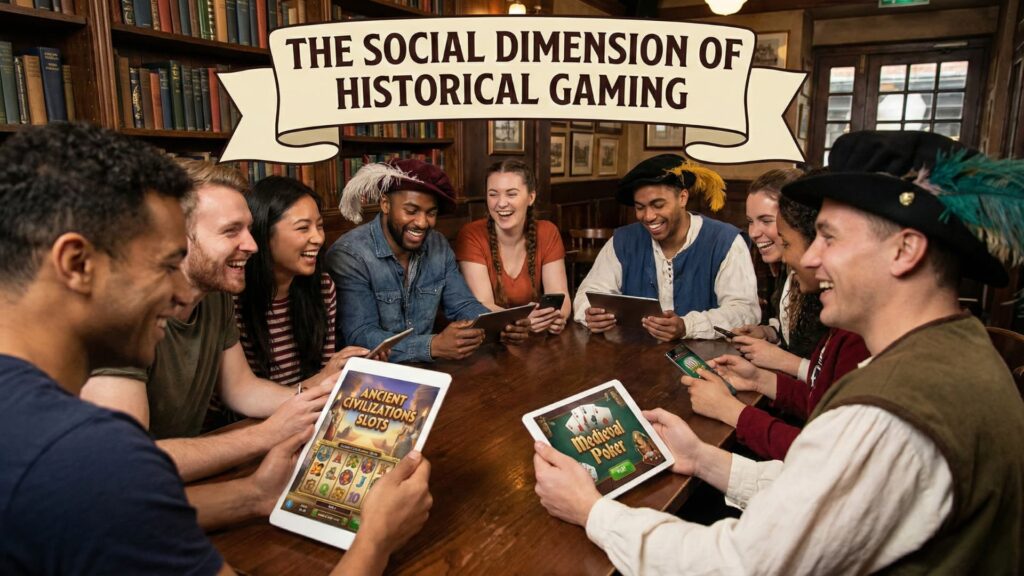
Traditional historical scholarship looks pretty lonely. Someone reading alone. Examining artifacts in quiet museum galleries. Doing isolated research. Digital gambling platforms flip this completely by adding social elements.
Lots of platforms have chat functions, leaderboards, team competitions. History buffs connect with others who share their interests. They discuss historical details while playing themed games. These communities develop their own cultures. Members share knowledge, debate accuracy, organize around common interests.
How gambling platforms build historical communities:
- Chat rooms focused on specific historical periods
- Forums where players argue about accuracy in game design
- Tournaments scheduled around historically important dates
- Features that reward sharing historical knowledge
- Player-created content based on historical research
- Cross-promotions with historical societies and museums
This addresses something traditional institutions struggle with: isolation. Younger people especially want learning environments with built-in social interaction. Gaming platforms give you that naturally. They create communities around shared historical interests that might never form otherwise.
Concerns About Commercialization of History
Mixing historical content with gambling bothers a lot of historians, educators, museum professionals. When historical knowledge becomes a marketing tool for commercial gambling, questions come up about accuracy, context, ethics.
Some platforms care more about entertainment than accuracy. They create romanticized or distorted versions of the past. A game might show ancient Rome through gladiator fights and excess while completely ignoring the actual political, social, cultural complexity of Roman civilization. These distortions reinforce misconceptions that educators then have to fix.
The gambling part itself troubles people. Using historical content to pull players into environments designed around betting money feels like it trivializes the past. It reduces complex civilizations to aesthetic themes for profit. Museums work to preserve and interpret history for public benefit. Gambling platforms mine historical imagery for commercial gain.
Addiction adds another concern. If someone develops gambling problems while playing historically themed games, their relationship with history itself might get complicated. Things that used to bring intellectual satisfaction could become triggers for unhealthy behavior.
Finding Balance in the Historical Landscape
Digital gambling platforms have already changed how many people spend their leisure time, history buffs included. Museums and cultural institutions can ignore this or engage with it thoughtfully.
Some institutions are exploring how to stay relevant when digital entertainment dominates attention. They build apps, create interactive online experiences, partner with gaming platforms to reach beyond physical galleries. The goal isn’t becoming entertainment venues. It’s meeting audiences where they already spend time.
History buffs navigate these changes individually. They balance traditional engagement with new digital options. Many keep museum memberships, read scholarly books, attend lectures while also spending time on historically themed gaming platforms. For most people, the activities coexist instead of competing.
The digital age of gambling hasn’t replaced traditional historical activities so much as added new options to the menu. Whether this enriches or dilutes historical engagement depends on how individuals, institutions, and platforms approach it. History has always adapted to new technologies and media. Gambling platforms are just the latest chapter in that evolution.